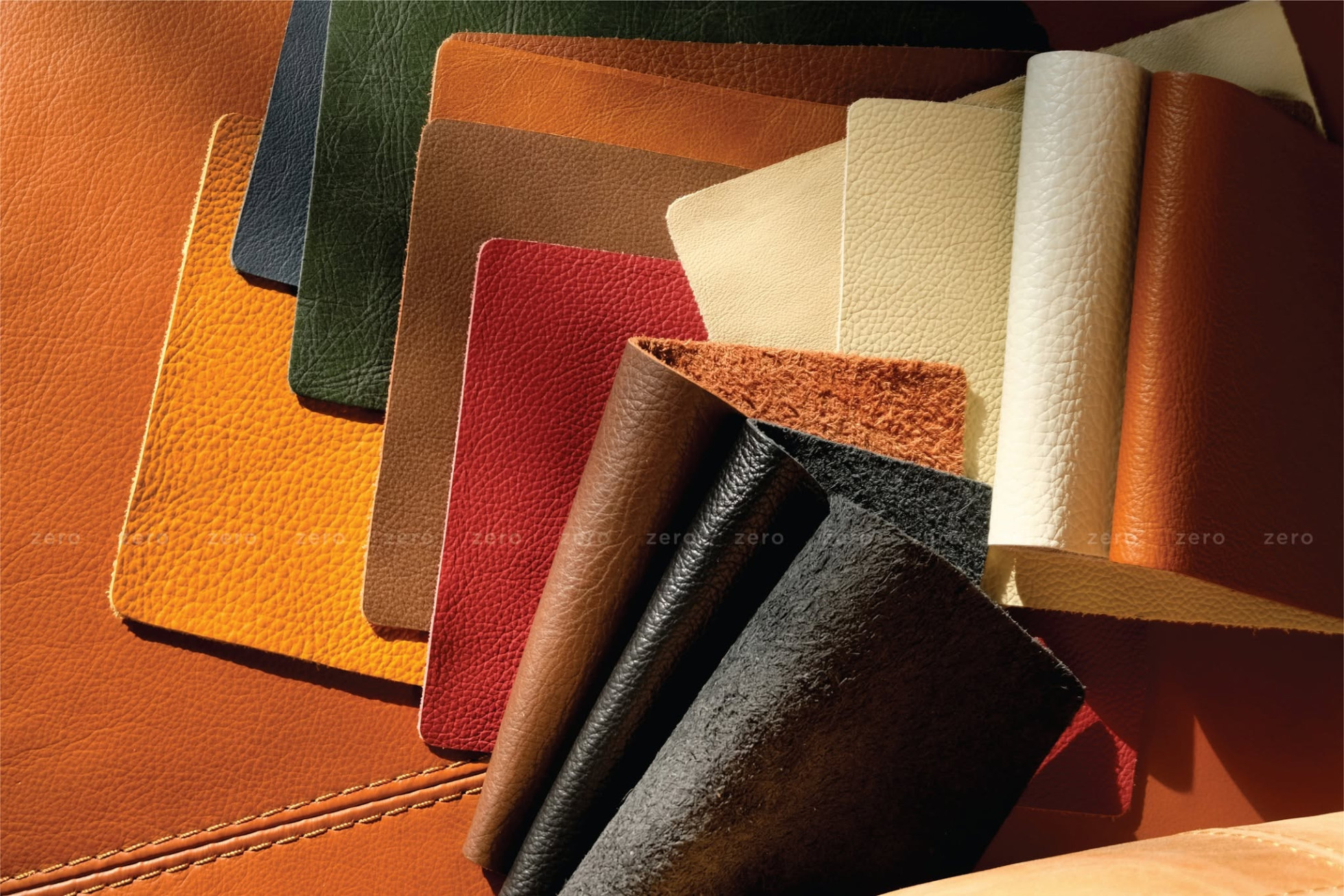
What To Know Before Choosing Upholstery For Your Sofa
After deciding between fabric and leather upholstery for your sofa, many customers often think the hardest part is over. But in reality, this is where many other choices begin. Whether you choose fabric or leather, each material offers a different feel and look and changes over time as you use it.
Before choosing upholstery material for your sofa, keep a few things in mind.
When choosing fabric, the surface is just as important as the color
Besides color, each fabric type has different thickness, softness, elasticity, and surface texture. These factors directly affect the appearance and feel of the finished product. For example, coarse woven fabrics with low elasticity feel sturdy, helping the sofa maintain its shape and creating a modern, structured look. Smooth, soft fabrics with good elasticity feel lighter, softer, and conform more naturally to the sofa's curves.
This is especially noticeable in sofa designs with many curves or rounded details, such as the NUS sofa, Peanut sofa, or Z-A03 armchair. For these designs, soft, highly elastic fabrics help the surface hug the product more closely, minimizing wrinkles and providing a more natural, finished look.
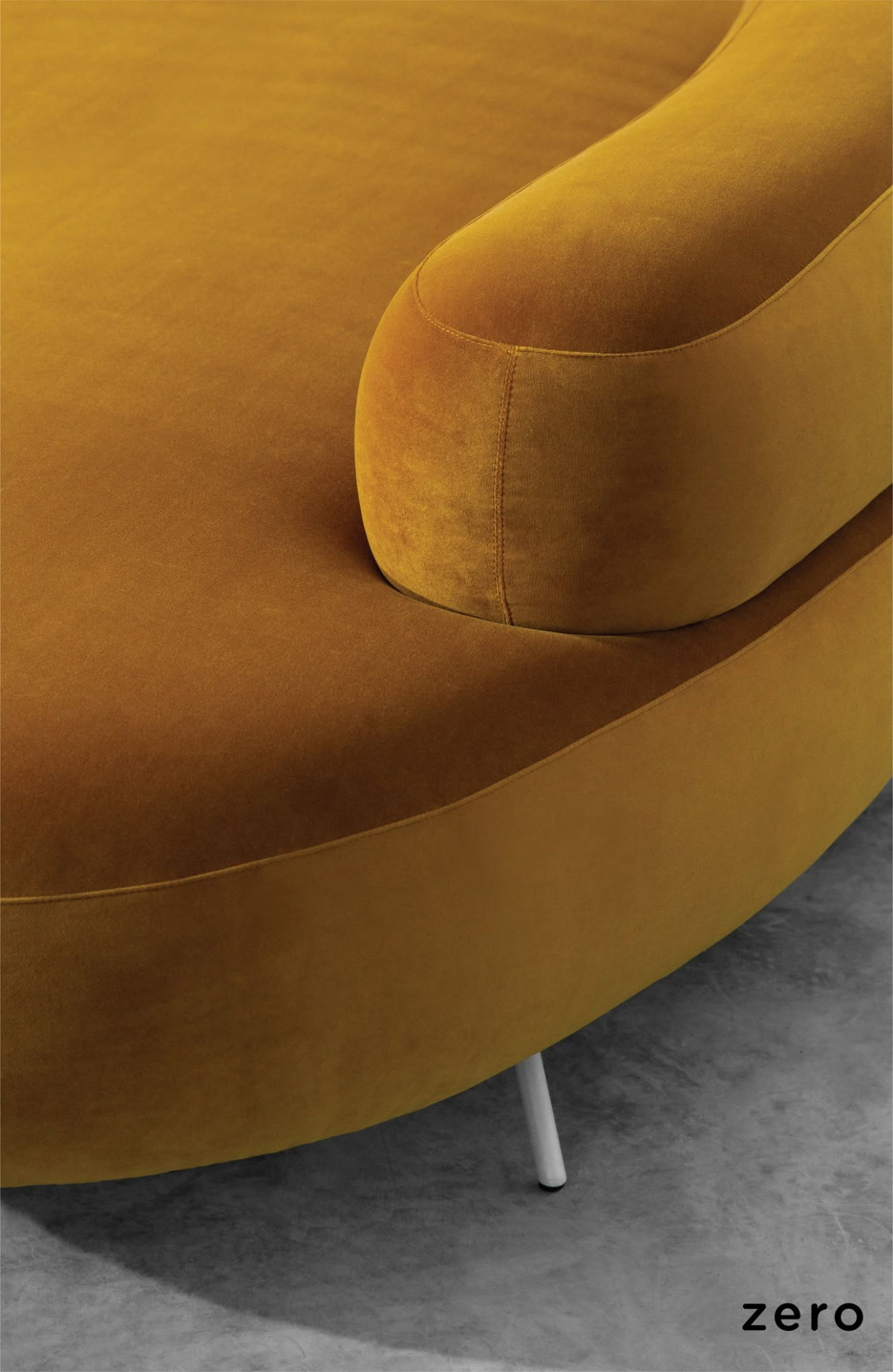
Velvet always looks better in person
While canvas or coarse woven fabrics are easy to visualize when choosing, velvet is different. Because of the velvet fibers and the fabric's surface direction, the color of product can change noticeably with viewing angle.
A velvet sofa may appear darker when viewed directly but lighter at an angle. During use, the velvet surface shows shade variations as the fiber direction changes after each touch. This is a natural characteristic of the material that gives the velvet fabric its unique beauty.
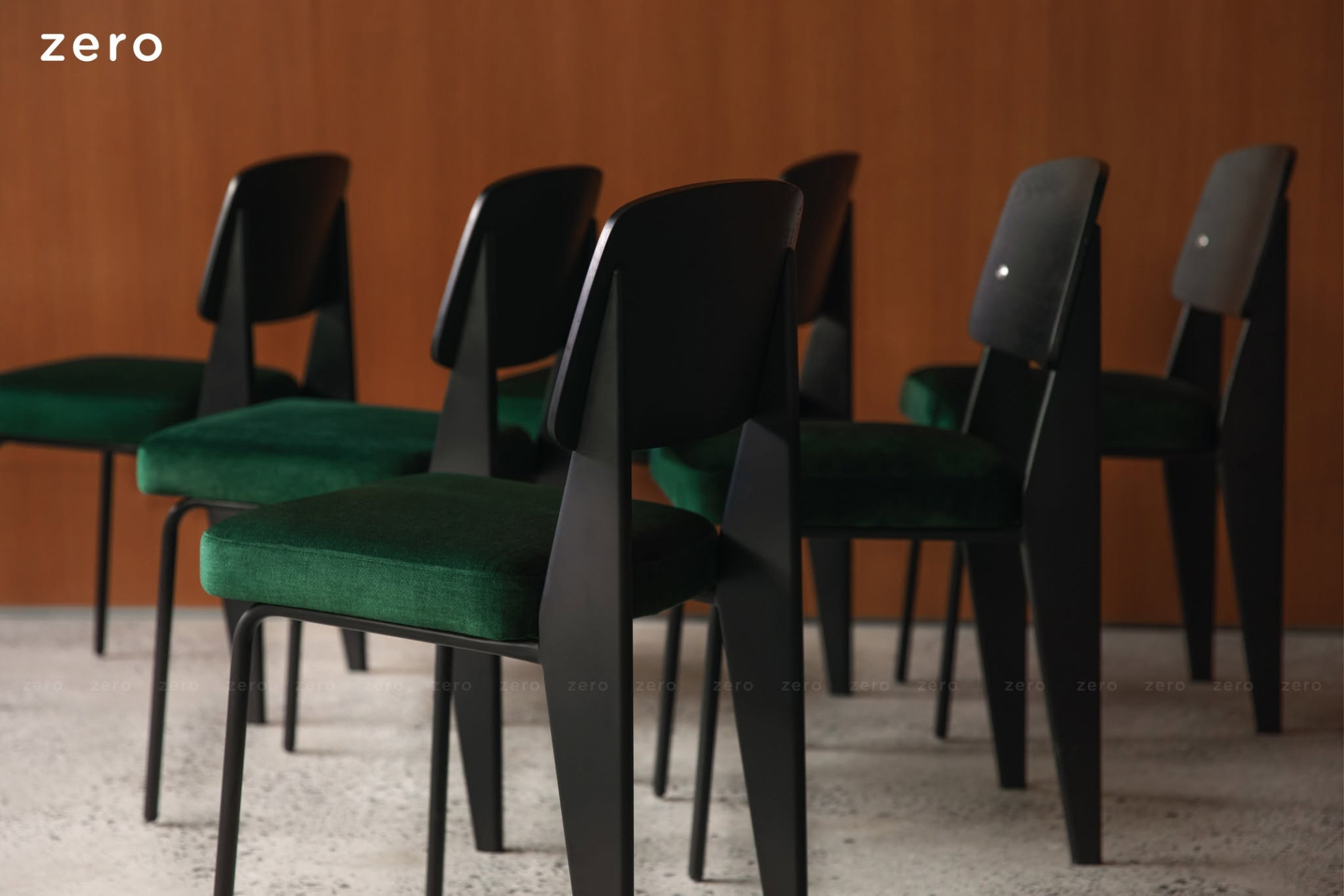
The multidimensional texture of velvet adds depth to the finished piece, with tones that shift slightly depending on the viewing angle.
The pattern on the fabric also needs to be considered
For striped or checked fabrics, upholstery is more complex than for plain fabrics. Most upholstery fabrics are approximately 1.4 meters wide. As a result, seams are often unavoidable on larger sofas. For curved designs, striped or checked patterns may not align as perfectly as they do on a fabric swatch. That's why it's always worth discussing pattern placement and expected results with your manufacturer before making a final decision.
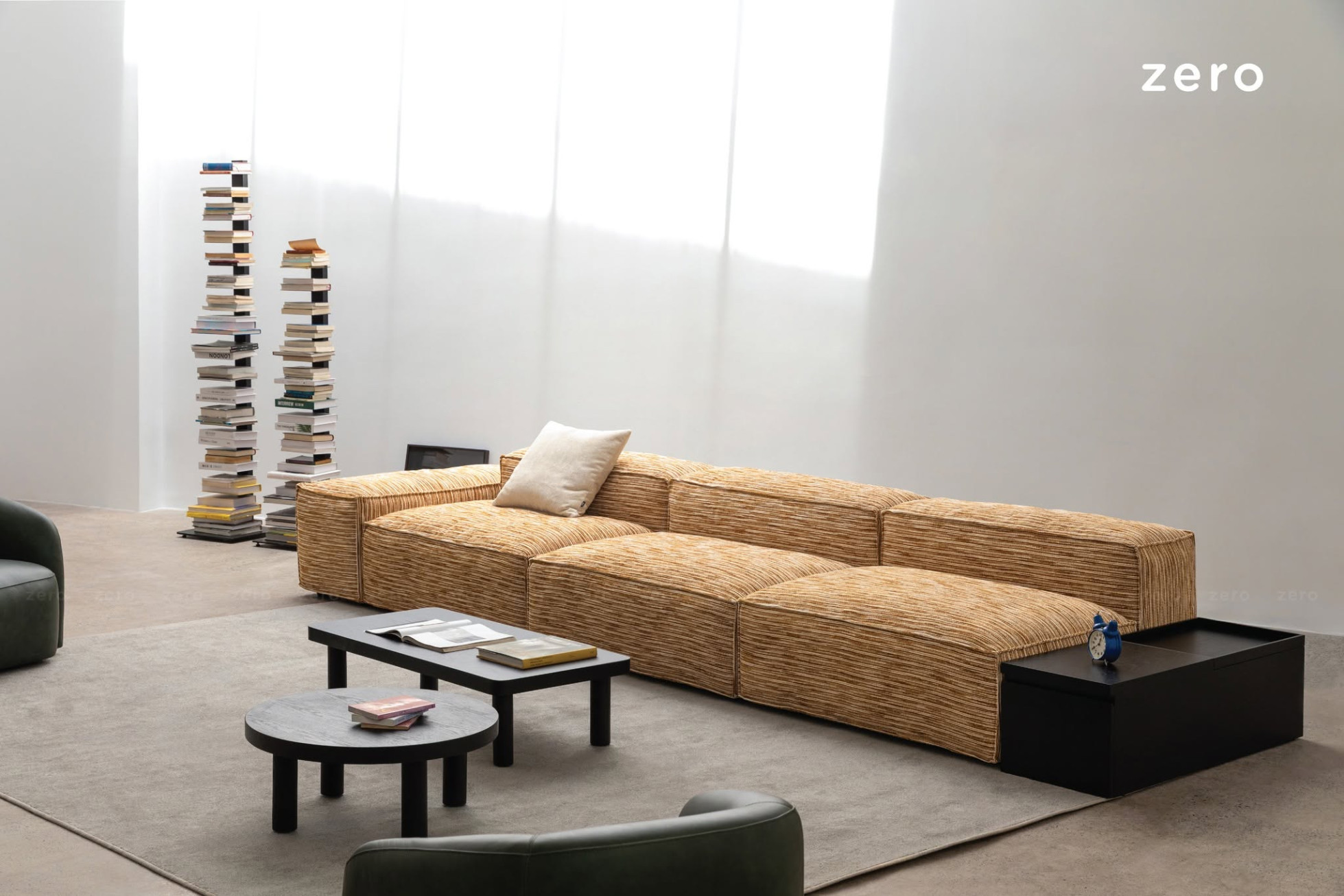
Selecting the right pattern orientation when upholstering a product requires careful consideration and experience from the manufacturer.
Upholstery also plays a bigger role in seating comfort than most people realize
Many people think seating comfort depends only on the foam or internal structure. But the upholstery material also makes a difference.
With the same sofa model and seat cushion structure, thin, highly elastic fabrics usually feel softer to the touch. Thicker, rougher fabrics with less elasticity help the product maintain its shape better, but they can feel more solid when you sit.
With sofas using feather or polyester fiber toppers, fabrics that are too thin sometimes reveal internal stitched compartments more visible. This is not a product defect, but a natural characteristic of the upholstery material and its internal structure.
Leather also has many different "personalities"
Like fabric, leather varies in more than just color. Each finish creates a different experience. Some people love the softness of leather. Others are attracted by the beauty of the natural marks that develop over time. Others prefer a surface that stays neat, holds its shape well, and remains stable after years of use.
Instead of delving into technical terms like Full Grain, Top Grain, or Aniline, we've divided the common types of leather into three easier-to-understand groups.
1. Soft, smooth leather
This leather feels soft and cool feel to the touch. Thanks to its high elasticity, this type of leather is especially suitable for sofas with soft, plush seating surfaces like Cloud or Modul+. Conversely, because the surface is smooth, the natural marks, wrinkles on the leather, or the dividers of the topper underneath are more easily visible.
2. Leather with an aged color effect
Certain leather varieties feature a subtle, mottled color effect on the surface. While they may look quite plain on small swatches, they reveal a range of shades over larger areas, creating depth and a classic, time-worn aesthetic.
3. Thick embossed leather
Thick, embossed leathers generally help the product maintain its shape better. Their low elasticity also helps mask natural grain patterns, topper seam lines, or surface scars. In return, it won't feel as soft or body-hugging as smooth leathers.
No material is perfect for all designs
Just as no single sofa suits everyone, no single fabric or leather type fits every design. What matters isn't which material is superior, but how well it aligns with the product's style, your lifestyle habits, and your aesthetic preferences. While color might catch our attention at first glance, it is the material itself that stays with us through every touch, every evening spent reading, every weekend gathering with family, and even the subtle changes that emerge only after years of use.
Choosing upholstery, then, is about much more than selecting a color. It's about choosing the experience you want to live with every day.
Living Notes
"We’ve put together these short notes from our own professional experience. We hope they give you a different perspective to think about before you make your decision."